The choice here is really about how long you want to stay. Dizzy Castle sells the whole day: pay once, go out for lunch, come back. City Play for Kids and Play Street Museum sell ninety-minute sessions, and Play Street also limits how many children can book each slot. Play Street and Kids Club Fun & Fitness sit less than a mile apart at the north end of the city and could hardly be less alike: one stops at eight and runs on weekday bookings, the other takes children to twelve and is a swim-and-gymnastics club with a three-story structure attached. Bring socks to City Play and Kids Club, but check which kind — grip socks are required at City Play and banned outright at Kids Club.
22 indoor playgrounds within 20 miles of Vancouver
Ages
Indoor PlaygroundPlay Cafe
Chicky Play Museum
★ 4.4(244)·Vancouver, WA·4.5 mi
The coffee bar is not an afterthought bolted to a playroom. It is a real cafe — espresso, food, ice cream — with tables at the edge of a single open floor, and reviewers keep landing on the same consequence: you can see every corner of the place from your chair. One describes parents working on laptops while their children ran the little shops. The layout is the product here, and it is deliberate.
What the children get is a pretend town rather than anything to climb: an ice cream shop, a grocery store, a vet's clinic, an interactive sandpit, an air-tube display. Everything is scaled to somewhere between twelve months and eight years. The sandpit and the air tubes are the two reviewers name unprompted.
Cleanliness is where the reviews genuinely disagree, and the disagreement is the useful part. Most call it spotless; a handful describe a visit where toys were strewn about, surfaces wanted a wipe and the bathroom had gone. One family who came twice reported one of each. The age cap is also softer than it looks, because the venue's own admission terms let an over-eight sibling in free. Weekday play is walk-in, in two-hour sessions with the doors shut for a sanitising break in the middle; weekends run on advance tickets that the multi-visit passes do not cover, which is the detail most likely to catch a regular out.
Busiest Sunday 12pm-6pm; weekends run about 1.26x weekday levels.
Inside Vancouver Village
Birthday parties at Chicky Play Museum
On the cheapest tier you bring the food and the decorations in yourself, so what you are actually paying staff for is the setting up and the clearing away. Everyone wears socks, adults included, and piñatas, confetti and smash cakes are all refused at the door. Two guests at separate parties describe a staff member speaking to them sharply, against a longer run of reviews calling the hosts kind.
Unless you join, Thursday morning is the only time you can play here. St Johns Swapnplay is a neighborhood nonprofit that runs on monthly memberships: member families let themselves in with their own door code whenever it is open, and everyone else comes to the weekly drop-in session, which is free on the first Thursday of each month. The two swapping rooms are for members only: shelves of outgrown clothes, gear, toys and books that member families leave and take for free.
The play space is for children up to seven, in rooms that each have a job: a cove where babies work on tummy time and pulling up, a central room of ride-on toys and an Imagination Playground set for building, a paint and play-dough room, a dress-up and kitchen room, and a reading loft. Outside is an enclosed yard with a dig pit, two slides, a rope bridge and a climbing dome. Older children come only with a younger sibling.
Reviewers write about the community as much as the play space: friends made, support for parents new to all of it, families coming since babyhood. It is nut-free, you pack out your own diapers, and it sits on four TriMet bus lines.
Three days a week the best thing in the building is switched off. The Ballocity tower runs on air compressors, and the club's own hours table marks Wednesday, Thursday and Friday with an asterisk explaining that those compressors are off and only the game floor is running. It is published, in a footnote, and easy to miss. If the ball blasters are what you are coming for, come at the start of the week or at the weekend.
What you are actually visiting is a swimming and gymnastics club that happens to contain a very large play structure. Lessons are the main business — swim, dance, gymnastics, preschool, after-school care — and the reviews follow the business: the warmest of them are about instructors coaxing frightened four-year-olds into the water, not about slides. The Jungle itself is three storeys, six slides, a suspension bridge, roller tubes, ball swings and a light-up floor, and anyone can pay at the desk and use it.
It skews older. Twelve is the ceiling and teenagers are barred from the structure outright, but school-age children set the tone, and two reviewers describe the crowding from opposite directions — weekend and camp-season afternoons get loud and physical, with small children up inside a three-storey maze an adult cannot easily follow them into. Under-twos have to be accompanied, which is the club's own rule and a sound one. Socks are compulsory for adults too, and unusually the grippy sort are banned rather than required, which catches out anyone arriving from the other playgrounds in town.
From $8.50✓ Verified by phone · Sep 2026
Café on siteSocks requiredAges 0–12Hosts parties✓ Sensory hours
People typically spend 45 min to 1.5 hr here
Busiest Tuesday 5pm-7pm; quiet until 1pm.
Birthday parties at Kids Club Fun & Fitness
The party splits down the middle: an hour loose in the climbing structure they call the Jungle, then an hour sat down. That order is the point — the food lands after the running rather than before it. Parties are semi-hosted, meaning someone else sets the room and clears it while you do the serving, and your guests can go back to the Jungle later the same day if the schedule allows.
If noise is the thing that ends your outings, start here. Three separate families describe bringing a child who struggles with crowds — an autistic grandson, a household navigating ADHD and sensory processing disorder, a boy overwhelmed on arrival who was handed a pair of headphones by the owner — and all three describe it going well. The owner taught special education for six years before opening the place, which is on her own about page, and it shows in how the room is run: places per session are capped, so fifteen or twenty children in a slot still reads as calm.
It is a small pretend-play museum built on a transport theme, a kid-sized city with an airport and a jet to fly, an ice cream truck, a pizzeria, a dinosaur skeleton to put together from big bones, and a live bearded dragon that reviewers rate as the surprise of the visit. Benches sit inside the play city, so you can be within reach without hovering. Sessions run five times a day on weekdays and have to be booked; weekends go to special events rather than ordinary play, so this is a weekday plan. Nominally it stops at eight, though a grandparent who expected a nearly-nine-year-old to find it babyish reported the opposite.
Busiest Saturday 10am-1pm; weekends run about 1.27x weekday levels.
Birthday parties at Play Street Museum - Vancouver
Aim this at the one-to-eight bracket the museum sells tickets for. What the room actually is, is a kid-sized play city — an ice cream truck to serve from, an airport, a jet to fly — so it rewards children who will play a scene rather than burn off energy. The weekday booking is the cheap one. Bring your own food and decorations; painting, slime and pottery are add-ons.
Pay once here and nobody starts a clock. A child can stay until closing, go out for lunch and come back the same afternoon, and parents say plainly that this is why they choose it over rooms selling ninety-minute slots. The trade is company: weekends run at roughly three times the weekday level, and Saturday afternoon is the peak of the week. A Tuesday morning is a different building.
There is a lot of building to be different. Thirteen thousand square feet holds a three-level castle, a seventy-foot pirate ship, rock walls, a snake pit and triple-wave slides, with a walled-off toddler section built around its own miniature version of the ship. The structure is rated for grown-ups, so a nervous three-year-old can be followed up rather than coaxed from the floor. The newest addition is the ball cannons, which turn up in review after review as the thing children make straight for.
Socks are required for anyone going into the structure, and no food comes in beyond a birthday cake with a party booking, so the cafe is the only option — reviewers rate the fresh-cooked pizza and the espresso, and split over whether it is dear. Lockers exist but you bring the padlock. The fit is walking age to about ten; teenagers are admitted only when they have a smaller child with them.
Busiest Saturday 1pm-5pm; weekends run about 3.08x weekday levels.
Birthday parties at Dizzy Castle
The cheap way in buys reserved tables in the café rather than one of the five themed rooms. Those start a tier up and come with the run of the play area once the party time is over. Cake, cupcakes, decorations and goody bags are the only things you may bring through the door; everything else has to be ordered from their kitchen.
Reviewer after reviewer describes the same scene rather than the same room: two or three staff circulating with cloths, resetting toys and putting things back where they belong while the children play around them. It is the most repeated observation in the file by a distance, and the mechanism behind it is worth knowing — play runs in ninety-minute sessions under a fifty-person cap, so the place gets reset instead of degrading across the day. One parent worked out the corollary for herself: it has never felt crowded to her, and she credits the clock.
Inside it is pretend play for roughly one to eight, deliberately screen-free, and it is one of the few rooms on this list that genuinely caters to a baby who is still crawling rather than merely tolerating one — reviewers with a nine-month-old and a fourteen-month-old say so specifically. Grip socks are compulsory for children, plain ones for adults, strollers stay in the car, and the place is nut-free, so outside food does not come in although a drink with a lid does. Busy mornings run a waitlist you can join before leaving home, and afternoons are the quieter half of the day. Weekend afternoons belong to private parties rather than open play, which is the likeliest way to arrive at a closed door.
The hosts are what people write about here — eight separate accounts of a party describe them setting it up, running it and taking it down. Worth knowing is how little time you get to dress the room: a quarter of an hour before the start on this tier, and one parent found even the longer window on the bigger package stressful. Grippy socks, and outside food is allowed for parties only.
The food cart pod beside the play structure is what makes Xplore worth the trip. Parents order from the carts while the children play, one reviewer listing Vietnamese, vegan, crepes, burgers, Indian street food and Mexican among them, and the pod has live music on summer weekend evenings. The counter inside sells its own snacks and meals for children and adults, so the carts are an option rather than the plan. You can bring outside food in, and there are adult drinks too.
The structure itself is multi-level, with slides, climbing challenges and obstacle courses. There is plenty of seating for parents who want to sit, talk or work, and a wristband lets you leave and come back. It holds older children too: a parent of a ten-year-old and a seven-year-old says both still love it, especially on weekdays; a grandparent reports the grandchildren playing for hours, and another parent says their son always finds someone to play with.
Parents keep coming back to the same feature: a parent section in the middle of the room, so you can sit down with a snack and still see your child digging. A parent of a four-year-old names that layout as the thing they love, a grandparent watching a two-and-a-half-year-old credits the clean sand and a washing station that is easy to get to, and families who held parties here describe actually sitting and talking while the children played. Clean comes up again and again.
The sand is the reason to come, and the venue takes it seriously: three sandboxes themed as dinosaurs, a construction site and a beach, filled with silica-free aragonite sand from the Bahamas that is sanitized daily, with the trucks, fossils and buckets supplied and outside toys kept out. Shoes and socks are both banned in the sand, for adults as well as children, so dress everyone for bare feet and dust. It is built mainly for preschoolers, though children up to twelve can play.
Two rules catch people out. A child with a runny nose or a cough will be asked to come back another day, and open play is no place for an informal birthday: no cake, balloons or presents. Holidays and school breaks switch to reservation-only tickets, so check before you drive over.
From $18from venue website, Oct 2026
Toddler areaCafé on siteAges 0–12Hosts parties✓ Sensory hours
Birthday parties at DiG PDX - Oregon's Largest Indoor Sandbox
The parents get the party off here: guests describe sitting down to talk while the children dig, with the whole floor open enough to watch from a chair. The birthday child has to be six or under, though guests can be any age. The regular slots are Saturdays and a Friday evening, weekdays go by inquiry, and there are no Sunday parties. Bring your own food; piñatas, glitter and confetti stay at home.
$575package
2 hours playtime plus 30 minutes setup · Private hire · whole venue
Despite the name, this Play Street Museum is in Hillsboro, so put the branch's own address into your map rather than heading for Beaverton. Play is by reservation on weekdays, in ninety-minute sessions with cleaning in between; the branch says Friday is its most popular day and worth booking a few days ahead, and if a session has room you can join it after it has started.
The museum is a small town for children to run: an ice cream shop, a grocery store, a café, a pet rescue and a recycling truck that two grandparents single out as the favorite of grandsons aged almost two and three. Craft sessions run alongside it, with slime, canvas painting, pottery and dip-dye among them. A parent with a two-and-a-half-year-old and a ten-month-old says both stayed busy for the whole session and the adults got to talk, and others find it clean and the staff helpful.
It is socks only, strollers stay out of the play area, and no food comes in, though drinks are fine. Weekends go to special themed playtimes rather than ordinary sessions.
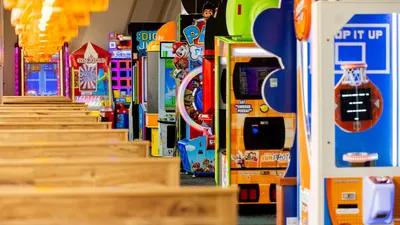
Indoor PlaygroundArcadeFamily Entertainment Center
Chuck E. Cheese
★ 4.2(1620)·Beaverton, OR·11.2 mi
The thing to know before you go is that the most physical part of this place costs extra. Alongside the arcade, this branch has a trampoline zone and an adventure zone. A family who visits every summer names the trampolines in the same breath as the games, but both are charged separately from game play. Two members on the gold Fun Pass point to its discount on the adventure area as part of what makes the membership pay, and one mentions that traction socks come with the adventure zone.
The rest of the reviews describe a branch that is run well. Staff are praised in review after review, the cleaning gets compliments, and the pizza draws more of them than you might expect, stuffed crust included. A parent of a three-year-old found plenty of games and rides a toddler can manage, and another likes that the floor is open enough to watch a child from one seat and that the Kid Check at the door stops a small child slipping out. It can get pricey without coupons or a membership, and one reviewer recommends weekdays for thinner crowds.
Toddler areaCafé on siteSocks requiredAges 3–12Hosts parties · per listings✓ Sensory hours
For a baby or a young toddler, the split into separate rooms by age is what makes it work. There is an infant and toddler room that older children are asked to leave to the under-twos when it is busy, a train room, a sand-and-water table, a pretend market with an ice cream counter, and a gross-motor room with a rock wall, foam pit, rope climb and monkey bars for three- to six-year-olds. A parent of a three-year-old says the separate rooms make it feel much less overwhelming than other play places, and a parent of a crawler calls it calm.
You pay once and can come and go all day, which several parents single out, and food is allowed in the snack area. Grip socks are required, and two reviewers found the floors slippery. Hours shift around private parties and events, as the venue says itself, and two parents found play ending earlier than they had expected, so check the calendar before you set off.
Cleanliness divides the reviews. Several describe the place as clean, while three, writing a year apart, describe broken toys, dirty bathrooms and rooms that had not been cleaned in some time.
From $18from venue website, Oct 2026
Toddler areaNo food on siteSocks requiredAges 0–6Hosts parties · per listings✓ Sensory hours
Look at what reviewers say about the cleaning before you go, because it keeps coming up, and the reports are hard to wave away. Reviewer after reviewer, across several months, describes a smell that hits at the door, sticky floors, dust and hair, grime on the structures and slide tubes, a toddler-area floor gone dark, and equipment broken or taped up. One family walked straight back out because of the smell; another asked for a refund and got one. Two reviewers say it has gotten worse.
The second theme is supervision. Several reviewers found no staff in the play area to enforce the rules, so shoes end up on floors where babies crawl, and one watched older children take over the toddler section. One part of the structure opens only when an attendant is there to harness children in.
Underneath it all is a big multi-level structure with trampolines, a zip line and a separate toddler area, plus a VR arcade and a restaurant that serves alcohol, and even some of the critical reviewers say their children had fun. Socks are required for adults too, and one adult may go on the structure with a child of five or under.
Three separate parents single out the same small mercy: you can bring your own snacks and drinks, as long as they stay out of the play area itself. The staff get warm notices too, and one grandparent says five grandchildren stay busy here for hours.
Inside is a big structure of tubes and inflatables for children from one to ten, with a toddler area kept for under-threes, building blocks included. Parents are welcome to play with their toddlers but are asked to stay out of the tubes and inflatables when other children are using them, and one adult who followed a small child through found it a squeeze. There is no time limit on a visit, though re-entry rules apply. Socks are required for adults as well as children, and the desk sells them if you forget.
It sits at the west end of Clackamas Town Center, above Dick's Sporting Goods, and one reviewer likes having the mall's food on hand. Another reviewer says it has improved over six months, with a staff member now cleaning the floor and equipment as she goes.
LEKA is for children under six and nobody else. The rule covers older siblings who only want to sit and watch, with no exceptions, which makes it an easy choice for a family whose children are all small and no choice at all for one with a school-age child along. Babies get a playroom of their own, for children up to eighteen months.
A Swedish mother started it, and the design follows: an uncluttered run of themed playrooms with mostly natural, low-tech toys in the Montessori and Waldorf mold, an interactive room with active games, and an outdoor area with water play that reviewers single out. Calm and clean are the words reviewers reach for again and again.
It is walk-in only, with a capacity limit and a waitlist when it fills, and mornings are the busy end of the day, so the venue itself suggests coming after lunch. You can leave and come back on the same ticket. Children with a cold are sent home, socks are compulsory for everyone, there is coffee for parents and beer, wine and cider after noon, and one parent found the entrance up a flight of stairs with no way to bring a stroller in.